/ EUR
/ EUR
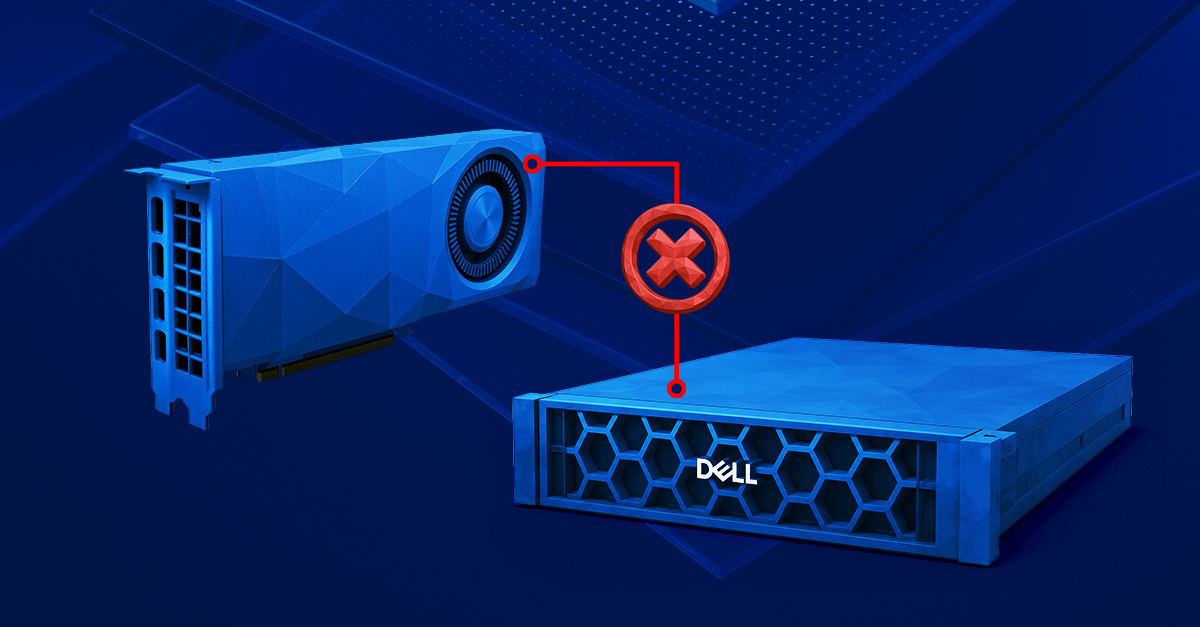
When buying an AI server, it's very easy to conclude that the best approach is to go for the "most powerful possible configuration" right away. The problem is that a top GPU server costing hundreds of thousands of dollars won't always be the most cost-effective. In many companies, two smaller GPU nodes work much better, providing greater flexibility, easier scaling and lower risk of blocking the entire infrastructure on a single workload.
Two cheaper GPU servers very often utilize real AI workload better
The biggest problem with top GPU servers is that they very rarely work constantly at 100% of their capabilities. And this is where the whole discussion about AI infrastructure cost-effectiveness begins.
In theory, a huge node with:
looks impressive. Except in normal corporate environments, AI workload usually isn't as predictable as in hyperscale clouds.
Very often it looks different:
- one team does inference,
- another runs fine-tuning,
- a third works on data periodically,
- some GPUs are practically idle for several hours.
And this is when the classic "single powerful server trap" appears. You have enormous computing power, but:
- workload is uneven,
- GPUs are not constantly loaded,
- one application can block resources for other projects.
That's why two smaller GPU servers very often turn out to be simply more practical. You can:
- distribute workload,
- run several projects in parallel,
- plan maintenance more easily,
- scale the environment gradually instead of "in jumps".
And that's exactly why many AI environments today don't end up on one "monster node", but on several well-balanced servers:
- 2-4 GPUs,
- sensible ECC RAM,
- fast NVMe,
- good network throughput.
This usually provides much better flexibility than a single gigantic GPU node.
One top GPU server still makes sense – but only for very specific workloads
There are scenarios where a single top GPU server really wins. Especially when:
- workload runs practically non-stop,
- GPUs are constantly loaded,
- models are very large,
- GPU-to-GPU communication matters enormously.
And that's exactly why environments like:
- HPC,
- large LLM clusters,
- multimodal model training,
- advanced deep learning,
are often still built around very powerful platforms like:
- 8× H100,
- HGX,
- NVLink,
- ultra-high-density GPU servers.
With such workloads, full GPU utilization can truly improve ROI of the entire platform. However, you must remember that an 8× H100 server can cost even $200,000-320,000 USD, but with very high GPU utilization, such a purchase can still be economically justified.
The problem starts when the environment doesn't maintain:
- high GPU load,
- continuous trainings,
- steady inference traffic.
Then a huge part of the infrastructure simply starts waiting for workload.
And that's exactly why top GPU servers make the most sense where:
- projects are very large,
- workload is predictable,
- infrastructure runs practically 24/7,
- the team can effectively manage the AI cluster.
Two smaller GPU nodes often win on flexibility, redundancy and TCO
The biggest advantage of two smaller GPU servers is that the infrastructure becomes much more resilient organizationally. And this often matters more than GPU benchmarks alone.
If one machine:
- requires maintenance,
- firmware updates,
- storage expansion,
- or simply fails,
the other node can still handle some AI workloads. With a single top server, this very often simply means stopping the entire environment.
That's why companies increasingly build AI in a model where:
- one node handles inference,
- another handles training,
- separate staging or development,
- workload distributed among several smaller servers.
And this is where configurations start looking much better:
- 2× server with 4 GPUs, instead of:
- one huge 8 GPU node.
Two cheaper GPU servers can cost together $120,000-200,000 USD, meaning significantly less than a top 8× H100 platform. And at the same time they provide:
- greater flexibility,
- easier scaling,
- simpler workload distribution,
- better infrastructure redundancy.
And that's exactly why many AI companies today start developing environments more modularly, instead of investing everything in one gigantic server.
The most cost-effective AI infrastructure is usually a well-balanced cluster, not "the biggest possible server"
With AI it's very easy to fall into the trap of buying infrastructure "for show". But AI models much more appreciate:
- well-distributed workload,
- fast storage,
- appropriate amount of RAM,
- sensible communication between nodes,
than just the number of GPUs listed in specs.
That's why the most sensible AI environments increasingly look like this today:
- several servers with 2-4 GPUs,
- separate roles for inference and training,
- ability to add more nodes as workload grows,
- NVMe storage and fast networking instead of one "monster" with underutilized GPU.
And this model works very well for:
- on-premise AI,
- development environments,
- local LLM,
- data analysis,
- enterprise inference.
Because the most expensive AI server doesn't necessarily have to be the most cost-effective. What's much more important is whether the infrastructure actually matches how your company uses GPUs every day.
Two cheaper GPU servers very often turn out to be more practical than one top node – especially in environments where AI workload is variable, develops in stages and requires flexibility. Top platforms still make sense, but only when GPUs work practically without interruption and the environment can truly utilize their full potential.
FAQ
Are two smaller GPU servers more cost-effective?
Very often yes – especially with uneven AI workload.
When does one top GPU node make the most sense?
With very large models and constant GPU utilization close to 100%.
Why do companies divide AI workload across multiple servers?
For greater flexibility, redundancy and easier scaling.
Are two GPU servers easier to expand?
Yes – you can add more nodes in stages instead of replacing the entire server.
Biggest problem with a single top server?
Risk of the entire infrastructure being blocked by one workload or failure.
What more often gives better ROI?
With lower GPU utilization – usually several smaller nodes.
Most important when building AI infrastructure?
Well-balanced architecture, not just maximum number of GPUs.