/ EUR
/ EUR
Rack or Blade – this is not just a question about the chassis, but about how your entire IT infrastructure operates. One will work well with steady expansion and limited budget. The other – with rapid scaling and large requirements. In this post you'll find concrete comparisons, numbers, scenarios and differences that really matter. All to select a solution tailored to your company's real needs, not trends.
Rack or Blade – what to choose when you don't want to overpay at the start?
If budget is limited and it's about a few servers – Rack will be cheaper, simpler and more flexible. Blade is great technology, but there's no point overpaying for something you can't fully utilize at small scale.
The most important things worth knowing.
- Rack doesn't need chassis (a special shared chassis) – one server, a rail and power suffice.
- Blade requires chassis, and that costs a lot upfront – even 40-60% more than a single Rack.
- For 1-5 servers, Blade simply doesn't pay off.
- With Rack you can start small, expand gradually, without big expenses upfront.
In practice many companies start with simple racks, because they don't have to plan a large environment from day one. Only when needs grow does space appear to think about something more complex.
When does Blade start paying off and Rack stop being enough?
If servers keep multiplying and infrastructure grows faster than it can be managed – that's when Blade starts making sense. It's not that Rack is bad, just that at some point it stops keeping pace with the scale.
What's worth knowing about this threshold?
- From around 10-15 servers, Blade can be cheaper and more convenient in the long run.
- In Blade everything works together – power, cooling, networking – so you don't have to manage each unit separately.
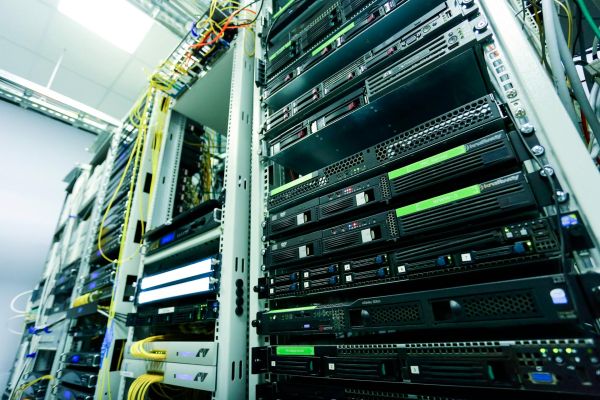
- Rack grows quickly – more cables, power supplies, more work with every new server.
- Blade allows adding another module in one chassis, without reorganizing the entire cabinet.
This is the moment when it's better to have order and cohesion than 15 independent "boxes" each plugged in separately. Especially if systems are critical and deployment time starts to matter.
Rack vs Blade – how much can we really save on power, space and cables?
In a large server room Blade provides significant savings – and it's not just about electricity. Fewer cables, fewer power supplies, less noise – it all makes a difference you can't cross with Rack.
Differences you actually notice:
- power consumption in Blade can be lower by even 25-35%,
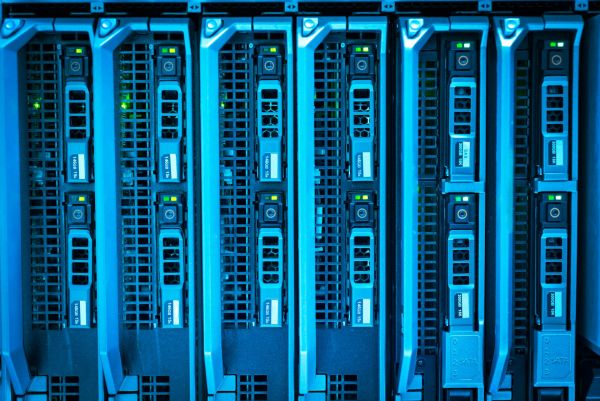
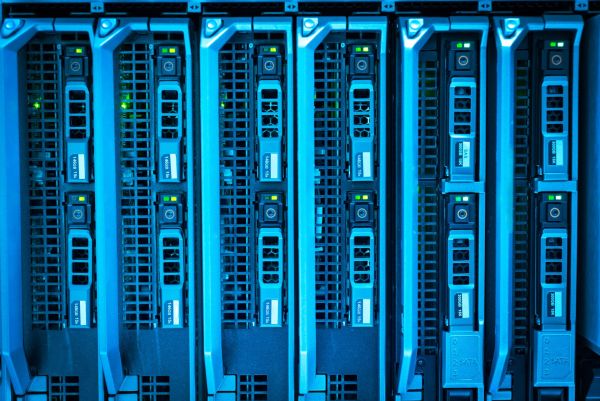
- one chassis = up to 16 servers, not 16 separate Rack units,
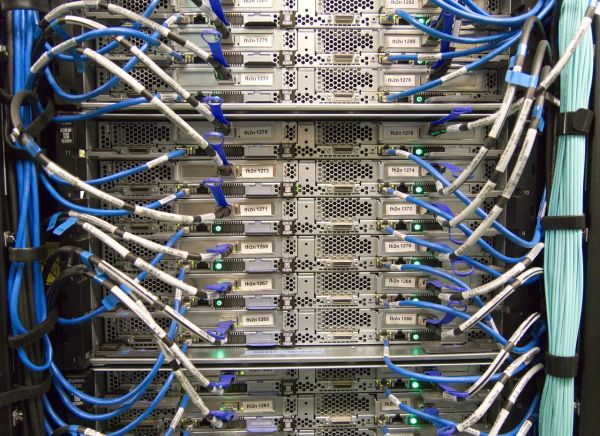
- cables are half or more fewer – meaning fewer errors, fewer overheated ports, fewer problems,
- Blade chassis (the shared housing) handles everything – no separate fans or power supplies for each server.
The more servers in the environment, the more Blade organizes infrastructure and limits the mess that can exhaust any IT department. Fewer things to check. Fewer points that can break.
Painless expansion – Blade or Rack for rapid IT scaling?
Blade wins if servers need to be added quickly and often. In an environment growing week by week, adding a new blade literally takes a few minutes. In Rack – it's a separate operation taking time and people.
The most important differences in expansion below.
- Blade is hot-swap – a new module slides in like a card into a pocket. Without downtime.
- Rack is full deployment – mounting, cabling, cooling, power configuration.
- In Blade everything inherits chassis settings – so it works immediately.
- A new Rack is often 30-60 minutes of work and several potential failure points.
In DevOps-type environments, analytics, CI/CD – where new VMs, hosts or containers are launched non-stop – Blade simply provides more comfort. Everything happens faster and without workarounds.
You have 5, 15 or 50 servers? See which architecture better handles your network
The more servers operating in the environment, the more order, energy efficiency and expansion time start to matter. And that's exactly why at small scale Rack suffices, but at larger scale – Blade starts making sense.
When does which architecture have an advantage?
- Up to 5 servers
- Rack is cheaper, simpler and sufficiently flexible.
- Blade offers no real benefits, and chassis is an unnecessary expense.
- Between 10 and 20 servers
- Rack starts becoming unclear – lots of cables, harder to manage.
- Blade enables fast deployment, lower power consumption and better organization.
- 50+ servers
- Blade provides concrete savings in space, power and management.
- Rack becomes inefficient, and the server room starts looking like a warehouse full of cables.
This is particularly clear where infrastructure develops dynamically – when jumping from a few to dozens of machines within a year. Blade then is no longer a "premium" option – just a sensible cost and operational decision.
Management and monitoring – where is it easier to maintain order: Rack or Blade?
In Blade everything can be managed from one console – this is a huge advantage when servers multiply. Rack allows flexibility, but each device operates separately and must be controlled individually or through external tools.
Management differences below.
- Blade
- Manage and monitor entire chassis from one place.
- Easier failure detection, faster problem response.
- Better integration with IT security systems.
- Rack
- Each server is a separate administrative unit.
- External tools needed (e.g. for SNMP monitoring, logs, temperatures).
- More time on configuration and updates – because you have to do it sequentially.
In small environments this isn't a problem. But when you have a dozen or more devices – infrastructure control requires automation and centralization. Blade introduces this order automatically.
Who should choose Blade, who Rack? Concrete scenarios, real decisions
There's no one right answer – it all depends on what, how and at what scale needs to operate. Rack is a good choice for companies that implement infrastructure in stages, want to limit costs and don't need immediate expansion. Blade works well where time, scalability and centralization are key.
Main scenarios where Rack works well:
- small companies (up to 20 employees),
- local environments: backups, domains, small databases,
- individual VMs or business applications,
- companies without dedicated server rooms, taking first steps in IT.
When it's better to go with Blade:
- medium and large organizations planning infrastructure development above 15 units,
- need for rapid scaling (e.g. new services weekly),
- virtual environments, compute clusters, containerization (Docker, Kubernetes),
- need for management centralization and energy savings.
Companies that build infrastructure for growth, not just "for now" often transition from Rack to Blade within 1-2 years. When the number of services grows, more applications arrive, redundancy and automation become necessary – Blade simply offers more possibilities without constant reorganization.
Planning an IT infrastructure investment or expansion of existing solutions? Reach out to Hardware Direct!
Not every company needs to start with Blade. And not every company can stay with Rack. That's why at Hardware Direct you'll find both technologies – ready to deploy, designed with specific applications in mind. Every server is tested before shipping, equipped with complete accessories and covered by warranty – ready to work immediately.
For smaller and medium companies wanting to start sensibly and not invest immediately in a full chassis – we recommend proven Rack models:
- Rack Servers Dell R630, R640, R650 – from 2 CPUs and 64 GB RAM, ready for backup, virtualization, SQL and domain controllers.
For companies with larger scale, VM environments or expansion plans – Blade will be a better choice:
- Blade Servers Dell M640, FC830, MX740c – modular, scalable, ready for CI/CD, containers, hybrid cloud and AI.
Need help selecting a specific configuration?
Reach out – we'll advise not just the hardware, but the architecture. So it makes sense today and tomorrow.
FAQ
From how many servers does Blade start making sense?
Usually people mention a threshold of 10-15 units. Below this number Blade doesn't offer real savings – chassis is expensive, and centralization benefits aren't yet noticeable. At larger scale – especially in virtualization-based environments – Blade can be cheaper, more organized and less problematic to maintain.
Do Blade servers consume less power than Rack?
Yes – even 25-35% less, especially in larger deployments. Blade uses shared power and cooling in the chassis, so you don't need separate power supplies, fans and interfaces for each unit. This is real savings, especially in data centers or companies that pay for power in a server model.
Can you mix Rack and Blade servers in one infrastructure?
Yes – many companies do this. Blade can serve as a host for virtualization or critical environments, while Rack – handles backups, file services, NAS or individual applications. It's just important to account for differences in management and spare parts availability.