 / EUR
/ EUR
Server-Konfiguratoren


- Server Dell PowerEdge R570 24x2.5" mit 1x 6747P, 512GB RAM, H965i, 2x 3.84TB SSD SAS 12G RI 2.5", 2x25GbE SFP28, 1x Nvidia L40S 48GB, 2x PSU 1800W, Montageschienen, Abdeckung, iDRAC10 Core1x Dell PowerEdge R570 24x2.5" Server-Plattform 1x CPU Intel Xeon 6747P 48-core 2.7GHz 288MB 330W SRVEZ 8x 64GB 4800MHz DDR5 RDIMM RAM-Speicher 2x Festplatte 3...Lieferzeit wird berechnet...Auf Lager 4Garantie 36 Monate56.491,62 € 45.928,15 €
- Server Dell PowerEdge R570 24x2.5" mit 1x 6747P, 256GB RAM, H965i, 2x 3.84TB SSD SAS 12G RI 2.5", 2x25GbE SFP28, 1x Nvidia L40S 48GB, 2x PSU 1800W, Montageschienen, Abdeckung, iDRAC10 Core1x Dell PowerEdge R570 24x2.5" Server-Plattform 1x CPU Intel Xeon 6747P 48-core 2.7GHz 288MB 330W SRVEZ 4x 64GB 4800MHz DDR5 RDIMM RAM-Speicher 2x Festplatte 3...Lieferzeit wird berechnet...Auf Lager 4Garantie 36 Monate44.861,62 € 36.472,86 €
- Server Dell PowerEdge R570 24x2.5" mit 1x 6747P, 128GB RAM, H965i, 2x 3.84TB SSD SAS 12G RI 2.5", 2x25GbE SFP28, 1x Nvidia L40S 48GB, 2x PSU 1800W, Montageschienen, Abdeckung, iDRAC10 Core1x Dell PowerEdge R570 24x2.5" Server-Plattform 1x CPU Intel Xeon 6747P 48-core 2.7GHz 288MB 330W SRVEZ 4x 32GB 4800MHz DDR5 RDIMM RAM-Speicher 2x Festplatte 3...Lieferzeit wird berechnet...Auf Lager 4Garantie 36 Monate40.023,54 € 32.539,46 €
- Server Dell PowerEdge R570 24x2.5" mit 1x 6747P, 64GB RAM, H965i, 2x 3.84TB SSD SAS 12G RI 2.5", 2x25GbE SFP28, 1x Nvidia L40S 48GB, 2x PSU 1800W, Montageschienen, Abdeckung, iDRAC10 Core1x Dell PowerEdge R570 24x2.5" Server-Plattform 1x CPU Intel Xeon 6747P 48-core 2.7GHz 288MB 330W SRVEZ 2x 32GB 4800MHz DDR5 RDIMM RAM-Speicher 2x Festplatte 3...Lieferzeit wird berechnet...Auf Lager 4Garantie 36 Monate36.627,58 € 29.778,52 €
- Server Dell PowerEdge R570 24x2.5" mit 1x 6521P, 64GB RAM, H365i, 2x10/25GbE SFP28, 2x PSU 1100W, Montageschienen, iDRAC10 Core1x Dell PowerEdge R570 24x2.5" Server-Plattform 1x CPU Intel Xeon 6521P 24-core 2.6GHz 144MB 225W SRVNS 2x 32GB 4800MHz DDR5 RDIMM RAM-Speicher 1x RAID Dell H3...Lieferzeit wird berechnet...Auf Lager 5Garantie 36 Monate18.629,22 € 15.145,71 €
- Server Dell PowerEdge R570 24x2.5" mit 1x 6511P, 1024GB RAM, H365i, 2x50GbE SFP56, 2x PSU 1100W, Montageschienen, iDRAC10 Core1x Dell PowerEdge R570 24x2.5" Server-Plattform 1x CPU Intel Xeon 6511P 16-core 2.3GHz 72MB 150W SRVU9 16x 64GB DDR5 RDIMM 5600MHz RAM-Speicher 1x RAID Dell H3...Lieferzeit wird berechnet...Auf Lager 5Garantie 36 Monate73.057,62 € 59.396,44 €
- Server Dell PowerEdge R570 24x2.5" mit 1x 6511P, 32GB RAM, H365i, 2x50GbE SFP56, 2x PSU 1100W, Montageschienen, iDRAC10 Core1x Dell PowerEdge R570 24x2.5" Server-Plattform 1x CPU Intel Xeon 6511P 16-core 2.3GHz 72MB 150W SRVU9 2x 16GB DDR5 RDIMM 5600MHz RAM-Speicher 1x RAID Dell H36...Lieferzeit wird berechnet...Auf Lager 4Garantie 36 Monate17.024,28 € 13.840,88 €
- Server Dell PowerEdge R570 24x2.5" mit 1x 6511P, 64GB RAM, H365i, 2x50GbE SFP56, 2x PSU 1100W, Montageschienen, iDRAC10 Core1x Dell PowerEdge R570 24x2.5" Server-Plattform 1x CPU Intel Xeon 6511P 16-core 2.3GHz 72MB 150W SRVU9 4x 16GB DDR5 RDIMM 5600MHz RAM-Speicher 1x RAID Dell H36...Lieferzeit wird berechnet...Auf Lager 4Garantie 36 Monate19.047,90 € 15.486,10 €
- Server Dell PowerEdge R570 24x2.5" mit 1x 6511P, 128GB RAM, H365i, 2x50GbE SFP56, 2x PSU 1100W, Montageschienen, iDRAC10 Core1x Dell PowerEdge R570 24x2.5" Server-Plattform 1x CPU Intel Xeon 6511P 16-core 2.3GHz 72MB 150W SRVU9 4x 32GB DDR5 RDIMM 5600MHz RAM-Speicher 1x RAID Dell H36...Lieferzeit wird berechnet...Auf Lager 4Garantie 36 Monate23.979,02 € 19.495,14 €
- Server Dell PowerEdge R570 24x2.5" mit 1x 6505P, 1024GB RAM, H365i, 2x 1.92TB SSD SATA 2.5", 2x50GbE SFP56, 2x PSU 1100W, Montageschienen, iDRAC10 Core1x Dell PowerEdge R570 24x2.5" Server-Plattform 1x CPU Intel Xeon 6505P 12-core 2.2GHz 48MB 150W SRVU7 16x 64GB 4800MHz DDR5 RDIMM RAM-Speicher 2x Festplatte 1...Lieferzeit wird berechnet...Auf Lager 5Garantie 36 Monate62.691,57 € 50.968,76 €
- Server Dell PowerEdge R570 24x2.5" mit 1x 6505P, 512GB RAM, H365i, 2x 1.92TB SSD SATA 2.5", 2x50GbE SFP56, 2x PSU 1100W, Montageschienen, iDRAC10 Core1x Dell PowerEdge R570 24x2.5" Server-Plattform 1x CPU Intel Xeon 6505P 12-core 2.2GHz 48MB 150W SRVU7 8x 64GB 4800MHz DDR5 RDIMM RAM-Speicher 2x Festplatte 1....Lieferzeit wird berechnet...Auf Lager 5Garantie 36 Monate39.431,57 € 32.058,19 €
- Server Dell PowerEdge R570 24x2.5" mit 1x 6505P, 256GB RAM, H365i, 2x 1.92TB SSD SATA 2.5", 2x50GbE SFP56, 2x PSU 1100W, Montageschienen, iDRAC10 Core1x Dell PowerEdge R570 24x2.5" Server-Plattform 1x CPU Intel Xeon 6505P 12-core 2.2GHz 48MB 150W SRVU7 8x 32GB 4800MHz DDR5 RDIMM RAM-Speicher 2x Festplatte 1....Lieferzeit wird berechnet...Auf Lager 4Garantie 36 Monate29.755,41 € 24.191,39 €
- Server Dell PowerEdge R570 24x2.5" mit 1x 6505P, 128GB RAM, H365i, 2x 1.92TB SSD SATA 2.5", 2x50GbE SFP56, 2x PSU 1100W, Montageschienen, iDRAC10 Core1x Dell PowerEdge R570 24x2.5" Server-Plattform 1x CPU Intel Xeon 6505P 12-core 2.2GHz 48MB 150W SRVU7 4x 32GB 4800MHz DDR5 RDIMM RAM-Speicher 2x Festplatte 1....Lieferzeit wird berechnet...Auf Lager 4Garantie 36 Monate22.963,50 € 18.669,51 €
- Server Dell PowerEdge R570 24x2.5" mit 1x 6505P, 64GB RAM, H365i, 2x 1.92TB SSD SATA 2.5", 2x50GbE SFP56, 2x PSU 1100W, Montageschienen, iDRAC10 Core1x Dell PowerEdge R570 24x2.5" Server-Plattform 1x CPU Intel Xeon 6505P 12-core 2.2GHz 48MB 150W SRVU7 4x 16GB DDR5 RDIMM 4800MHz RAM-Speicher 2x Festplatte 1....Lieferzeit wird berechnet...Auf Lager 4Garantie 36 Monate19.753,62 € 16.059,85 €
- Server Dell PowerEdge R570 24x2.5" mit 1x 6505P, 32GB RAM, H365i, 2x 1.92TB SSD SATA 2.5", 2x50GbE SFP56, 2x PSU 1100W, Montageschienen, iDRAC10 Core1x Dell PowerEdge R570 24x2.5" Server-Plattform 1x CPU Intel Xeon 6505P 12-core 2.2GHz 48MB 150W SRVU7 2x 16GB DDR5 RDIMM 4800MHz RAM-Speicher 2x Festplatte 1....Lieferzeit wird berechnet...Auf Lager 3Garantie 36 Monate17.962,59 € 14.603,73 €
- Server Dell PowerEdge R570 24x2.5" mit 1x 6511P, 512GB RAM, H365i, 2x50GbE SFP56, 2x PSU 1100W, Montageschienen, iDRAC10 Core1x Dell PowerEdge R570 24x2.5" Server-Plattform 1x CPU Intel Xeon 6511P 16-core 2.3GHz 72MB 150W SRVU9 8x 64GB DDR5 RDIMM 5600MHz RAM-Speicher 1x RAID Dell H36...Lieferzeit wird berechnet...Auf Lager 4Garantie 36 Monate44.029,14 € 35.796,05 €
- Server Dell PowerEdge R570 24x2.5" mit 1x 6511P, 256GB RAM, H365i, 2x50GbE SFP56, 2x PSU 1100W, Montageschienen, iDRAC10 Core1x Dell PowerEdge R570 24x2.5" Server-Plattform 1x CPU Intel Xeon 6511P 16-core 2.3GHz 72MB 150W SRVU9 8x 32GB DDR5 RDIMM 5600MHz RAM-Speicher 1x RAID Dell H36...Lieferzeit wird berechnet...Auf Lager 3Garantie 36 Monate32.957,38 € 26.794,62 €
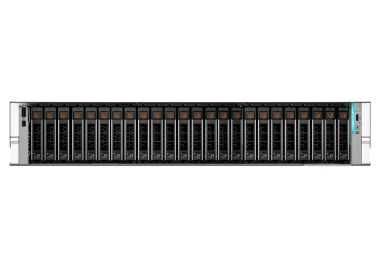
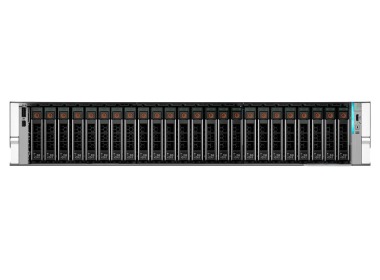
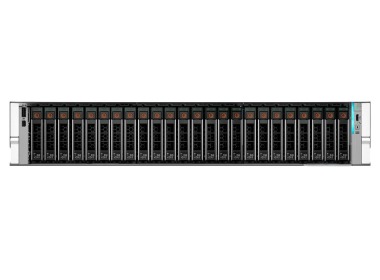
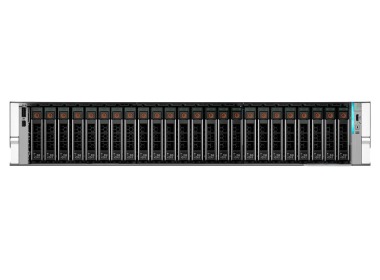
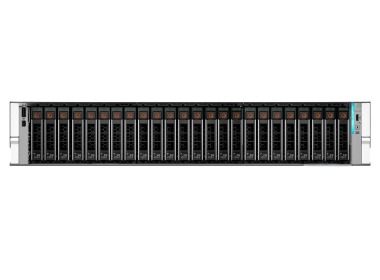
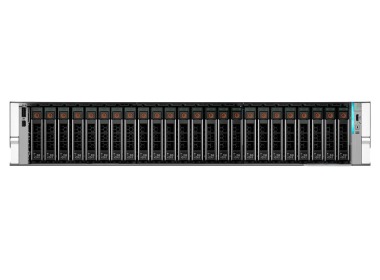
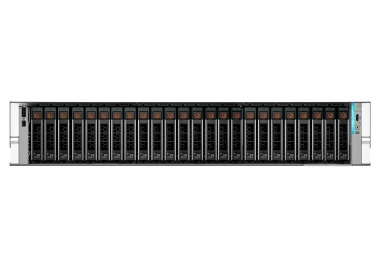
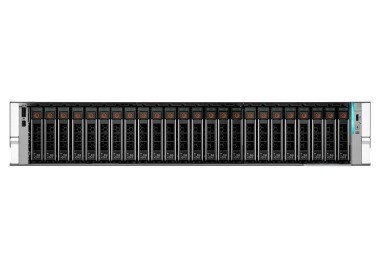
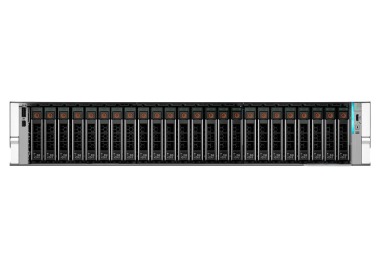
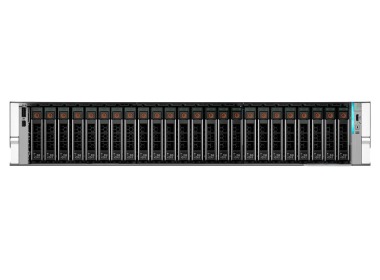
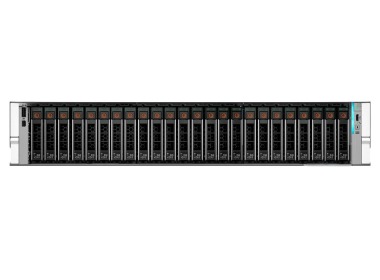
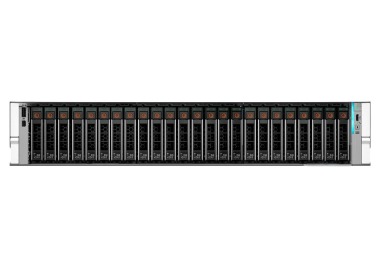
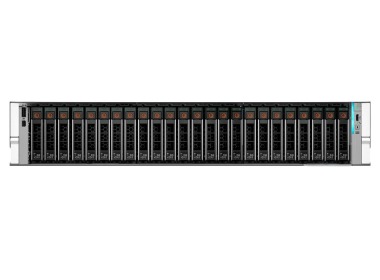
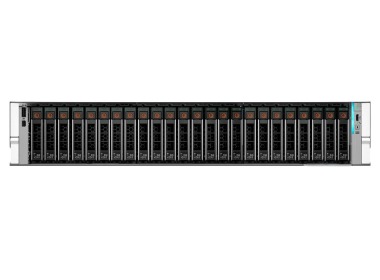
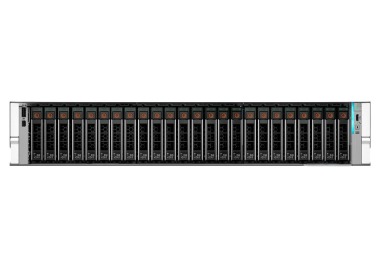
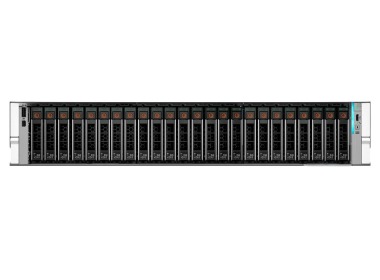
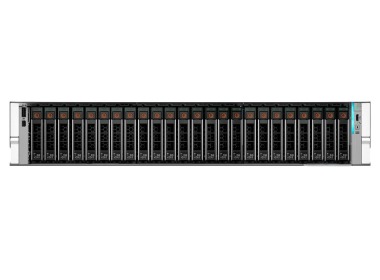
The Dell PowerEdge R570 is a single-processor rack server in a 2U chassis, built on Intel Xeon 6, with 16 DDR5 slots, six PCIe slots, and room for GPU cards. A single processor means a simpler platform and – with per-core licensing – often a lower software bill. Below, we break down the R570 into its components: what is inside, how it differs from its neighbors, and who it truly pays off for.
What is the Dell PowerEdge R570?
The R570 belongs to the Dell 17th generation servers and is a single-socket platform, meaning it has one processor socket. Dell designed it for virtualization, databases, edge computing, and software-defined storage. The 2U height is not a coincidence – that much space is needed to fit drive bays, expansion cards, and GPUs simultaneously, without choking the cooling.
Looking for a different platform from the same generation? Check the Dell PowerEdge R770, R7715, or R7725. Prefer proven models from the previous generation? Then the R760 and R660.
Key features of the Dell R570. What makes it stand out?
The most common question we encounter is „what is special about this, since it is only one processor?”. The answer lies in the details:
- one Xeon 6 in P-core version with up to 86 cores or E-core with up to 144 cores, delivering substantial power without a second socket,
- 16 DDR5 slots at up to 6400 MT/s and a limit of up to 4 TB RAM (P-core, R1S option) or up to 1 TB (E-core),
- NVMe Gen5 and EDSFF E3.S – up to 32 E3.S bays at the front, alongside traditional SAS and SATA drives,
- up to 6 PCIe slots, including 4 in Gen5, plus 2 OCP 3.0 slots for network adapters,
- up to 3 GPU cards at 400 W dual-width, which in a 2U chassis with a single processor is uncommon,
- iDRAC10 for remote management, without traveling to the server room.
Worth noting: the BOSS-N1 module allows you to install the operating system on 2 M.2 NVMe drives and separate it from data. In virtualization, this saves slots in the front bay and simplifies the replacement of production drives.
Dell PowerEdge R570 technical specifications
|
Parameter |
Dell PowerEdge R570 |
What it provides |
|
Chassis |
2U rack |
Room for drives, GPU, and cards in a single chassis. |
|
Processor |
1x Intel Xeon 6 (P-core up to 86 cores, E-core up to 144) |
Multi-core power without a second processor. |
|
RAM |
16x DDR5 RDIMM ECC, up to 6400 MT/s, up to 1 TB (E-core) or 4 TB (P-core R1S) |
Ample headroom for many virtual machines or an in-memory database. |
|
Storage |
SAS/SATA 2.5" and 3.5", NVMe Gen5, E3.S, up to 12x 3.5" in RAID |
Capacity or speed – depending on the task. |
|
Controllers |
PERC H365i, H965i; external H965e, HBA 465e |
Hardware RAID and connection to external shelves. |
|
Expansion |
up to 6 PCIe slots, including 4x Gen5; 2x OCP 3.0 |
Room for GPU, NIC, and controllers simultaneously. |
|
GPU |
up to 3x 400 W dual-width or up to 4x 75 W single-width |
A server for AI and computing in 2U. |
|
Management |
iDRAC10 with Lifecycle Controller |
Remote diagnostics, updates, console. |
In our Dell PowerEdge R570 server offering, you will find pre-configured solutions based on the following processors:
- Xeon 6505P – 12 cores, 150 W,
- Xeon 6511P – 16 cores, 150 W,
- Xeon 6521P – 24 cores, 225 W,
- Xeon 6747P – 48 cores, 330 W, with an NVIDIA L40S 48 GB card and 1800 W power supplies.
Every configuration comes with a 36-month warranty and can be customized in the configurator. Memory is selected from the RDIMM RAM offering, and the controller from Dell RAID controllers.
How does the Dell R570 stand out compared to other servers?
First: licensing. Windows Server, SQL Server, and some virtualization software are licensed per core. A single processor means fewer cores to pay for than in a dual-processor server of comparable power. Verify licensing terms with your software vendor – they change more often than hardware.
Second: simplicity. With two processors, NUMA comes into play, a situation where memory „belongs” to a specific socket and is accessed more slowly by the other. With a single processor, this issue disappears, and virtual machines are laid out on the host without complications.
Third: space. Compared to 1U servers, a 2U chassis provides more PCIe slots and drive bays. The result? A GPU, a fast network adapter, and a RAID controller all fit together. As the budget grows, so does the server – by adding NVMe drives or graphics cards instead of purchasing another machine.
Fourth: generation. DDR5, PCIe Gen5, and E3.S are components that simply do not exist on older platforms. For a purchase intended to last several years, the difference will be visible in throughput, not just in the specification sheet.
Dell R570 use cases in a business environment
From our experience, the R570 fits several specific scenarios:
- Virtualization – 16 DIMMs and up to 4 TB RAM provide a solid foundation for VMware servers and Proxmox servers; with 24 or 48 cores, it hosts many VMs on a single socket.
- Databases and ERP – for companies using Comarch Optima, Enova365, or SAP, a configuration with 12–24 cores and fast SSDs is sufficient; more in the servers for Microsoft SQL Server offering.
- AI and inference – the version with an NVIDIA L40S 48 GB card handles local model deployment; check AI servers if you need to compare with other GPU platforms.
- Backup and storage – numerous drive bays and fast 25 or 50 GbE networking work well as a host for Veeam or as a storage node; for larger capacities, Dell disk arrays are available.
Power and cooling? The R570 runs on redundant power supplies, and the entire setup fits well in a rack cabinet with UPS backup power.
Who is the Dell PowerEdge R570 for?
For companies that need the power of a production server but do not want to pay for a second processor they will not use. Most commonly, these are:
- small and medium-sized businesses with ERP and an SQL database, replacing an older server from a previous generation,
- IT teams building a virtualization cluster, where per-core licensing cost matters,
- R&D departments and software houses running AI models locally, without renting GPU resources in the cloud,
- integrators who want a single platform for multiple deployments.
And when is the R570 not the right choice? When the project requires more than one processor or resources exceeding the limits of a single socket. In that case, it is better to speak with our advisor right away – we will match the platform to the workload, and if you need hardware for a shorter term, consider server leasing. It is also worth checking whether old equipment can be traded in through our buyback program.
FAQ
How much RAM does the Dell PowerEdge R570 support?
The server has 16 DDR5 RDIMM ECC slots running at speeds of up to 6400 MT/s. The limit depends on the processor: up to 1 TB with Xeon 6 E-core and up to 4 TB with Xeon 6 P-core in the R1S variant. Pre-configured options in our offering range from 32 GB to 1024 GB of RAM.
Can a graphics card be installed in the Dell R570?
Yes. Dell supports up to 3 GPU cards at 400 W dual-width or up to 4 cards at 75 W single-width. Our offering includes configurations with NVIDIA L40S 48 GB and 1800 W power supplies.
Is the Dell PowerEdge R570 suitable for SQL Server and ERP?
Yes. For a typical ERP and SQL database, a configuration with 12–24 cores, 128–256 GB RAM, and SSDs in RAID is sufficient. A single processor can reduce per-core licensing costs, but licensing terms should be confirmed with the software vendor.
How does the R570 differ from dual-processor servers?
The R570 has a single processor socket, so there is no NUMA overhead, and per-core licensing is typically lower. On the other hand, the server is limited to 86 P-cores or 144 E-cores. When the project requires more, an advisor will match a different platform.
What warranty do Dell R570 servers carry at Hardware Direct?
Configurations from our offering come with a 36-month warranty. Detailed terms and extension options are available on the warranties page or from our advisor.
Can I customize the R570 server configuration?
Yes. In the Dell PowerEdge R570 configurator, you can select the processor, amount of RAM, drives, controller, and network adapters. If you are unsure what to choose, describe your workload to us – we will recommend a configuration.