 / EUR
/ EUR
Server-Konfiguratoren


- Serwer Dell PowerEdge R7725 8x2.5" mit 2x EPYC 9015, 256GB RAM, H365i, 2x 240GB SSD SATA 2.5", 4x 3.84TB SSD NVMe U.2 2.5", 4x10GbE SFP+, 2x PSU 2400W, Montageschienen, iDRAC10 CoreDieses Set enthält: 1x Dell PowerEdge R7725 8x2.5" Server-Plattform 2x CPU Dell 9015 8-core 3.6GHz 64MB 125W D 8x 32GB DDR5 RDIMM 6400MHz RAM-Speicher 4x 3.84...Lieferzeit wird berechnet...Auf Lager 3Garantie 36 Monate41.544,09 € 33.775,68 €
- Serwer Dell PowerEdge R7725 8x2.5" mit 2x EPYC 9015, 128GB RAM, H365i, 2x 240GB SSD SATA 2.5", 4x 3.84TB SSD NVMe U.2 2.5", 4x10GbE SFP+, 2x PSU 2400W, Montageschienen, iDRAC10 CoreDieses Set enthält: 1x Dell PowerEdge R7725 8x2.5" Server-Plattform 2x CPU Dell 9015 8-core 3.6GHz 64MB 125W D 4x 32GB DDR5 RDIMM 6400MHz RAM-Speicher 4x 3.84...Lieferzeit wird berechnet...Auf Lager 3Garantie 36 Monate33.496,12 € 27.232,62 €
- Serwer Dell PowerEdge R7725 8x2.5" mit 2x EPYC 9015, 32GB RAM, H365i, 2x 240GB SSD SATA 2.5", 4x 3.84TB SSD NVMe U.2 2.5", 4x10GbE SFP+, 2x PSU 2400W, Montageschienen, iDRAC10 CoreDieses Set enthält: 1x Dell PowerEdge R7725 8x2.5" Server-Plattform 2x CPU Dell 9015 8-core 3.6GHz 64MB 125W D 2x 16GB DDR5 RDIMM 6400MHz RAM-Speicher 4x 3.84...Lieferzeit wird berechnet...Auf Lager 3Garantie 36 Monate28.234,71 € 22.955,05 €
- Serwer Dell PowerEdge R7725 8x2.5" mit 2x EPYC 9015, 64GB RAM, H365i, 2x 240GB SSD SATA 2.5", 4x 3.84TB SSD NVMe U.2 2.5", 4x10GbE SFP+, 2x PSU 2400W, Montageschienen, iDRAC10 CoreDieses Set enthält: 1x Dell PowerEdge R7725 8x2.5" Server-Plattform 2x CPU Dell 9015 8-core 3.6GHz 64MB 125W D 4x 16GB DDR5 RDIMM 6400MHz RAM-Speicher 4x 3.84...Lieferzeit wird berechnet...Auf Lager 3Garantie 36 Monate31.021,25 € 25.220,53 €
- Serwer Dell PowerEdge R7725 8x2.5" mit 2x EPYC 9015, 32GB RAM, H365i, 2x 240GB SSD SATA 2.5", 2x PSU 800W, Montageschienen, iDRAC10 CoreDieses Set enthält: 1x Dell PowerEdge R7725 8x2.5" Server-Plattform 2x CPU Dell 9015 8-core 3.6GHz 64MB 125W D 2x 16GB DDR5 RDIMM 6400MHz RAM-Speicher 2x SSD ...Lieferzeit wird berechnet...Auf Lager 3Garantie 36 Monate23.462,23 € 19.074,98 €
- Serwer Dell PowerEdge R7725 8x2.5" mit 2x EPYC 9135, 32GB RAM, H365i, 2x 480GB SSD SATA 2.5", 4x10GbE SFP+, 2x PSU 2400W, Montageschienen, iDRAC10 CoreDieses Set enthält: 1x Dell PowerEdge R7725 8x2.5" Server-Plattform 2x CPU AMD EPYC 9135 16-core 3.65GHz 64MB 200W 2x 16GB DDR5 RDIMM 6400MHz RAM-Speicher 2x ...Lieferzeit wird berechnet...Auf Lager 3Garantie 36 Monate23.409,19 € 19.031,86 €
- Serwer Dell PowerEdge R7725 8x2.5" mit 2x EPYC 9135, 64GB RAM, H365i, 2x 480GB SSD SATA 2.5", 4x10GbE SFP+, 2x PSU 2400W, Montageschienen, iDRAC10 CoreDieses Set enthält: 1x Dell PowerEdge R7725 8x2.5" Server-Plattform 2x CPU AMD EPYC 9135 16-core 3.65GHz 64MB 200W 4x 16GB DDR5 RDIMM 6400MHz RAM-Speicher 2x ...Lieferzeit wird berechnet...Auf Lager 3Garantie 36 Monate26.195,74 € 21.297,35 €
- Serwer Dell PowerEdge R7725 8x2.5" mit 2x EPYC 9135, 128GB RAM, H365i, 2x 480GB SSD SATA 2.5", 4x10GbE SFP+, 2x PSU 2400W, Montageschienen, iDRAC10 CoreDieses Set enthält: 1x Dell PowerEdge R7725 8x2.5" Server-Plattform 2x CPU AMD EPYC 9135 16-core 3.65GHz 64MB 200W 4x 32GB DDR5 RDIMM 6400MHz RAM-Speicher 2x ...Lieferzeit wird berechnet...Auf Lager 3Garantie 36 Monate28.670,60 € 23.309,43 €
- Serwer Dell PowerEdge R7725 8x2.5" mit 2x EPYC 9135, 256GB RAM, H365i, 2x 480GB SSD SATA 2.5", 4x10GbE SFP+, 2x PSU 2400W, Montageschienen, iDRAC10 CoreDieses Set enthält: 1x Dell PowerEdge R7725 8x2.5" Server-Plattform 2x CPU AMD EPYC 9135 16-core 3.65GHz 64MB 200W 8x 32GB DDR5 RDIMM 6400MHz RAM-Speicher 2x ...Lieferzeit wird berechnet...Auf Lager 3Garantie 36 Monate36.718,56 € 29.852,49 €
- Serwer Dell PowerEdge R7725 8x2.5" mit 2x EPYC 9135, 256GB RAM, H365i, 2x 480GB SSD SATA 2.5", 6x 1.6TB SSD SAS 12G RI 2.5", 4x10GbE SFP+, 2x PSU 2400W, Montageschienen, iDRAC10 CoreDieses Set enthält: 1x Dell PowerEdge R7725 8x2.5" Server-Plattform 2x CPU AMD EPYC 9135 16-core 3.65GHz 64MB 200W 8x 32GB DDR5 RDIMM 6400MHz RAM-Speicher 6x ...Lieferzeit wird berechnet...Auf Lager 3Garantie 36 Monate39.812,60 € 32.367,97 €
- Serwer Dell PowerEdge R7725 8x2.5" mit 2x EPYC 9135, 128GB RAM, H365i, 2x 480GB SSD SATA 2.5", 6x 1.6TB SSD SAS 12G RI 2.5", 4x10GbE SFP+, 2x PSU 2400W, Montageschienen, iDRAC10 CoreDieses Set enthält: 1x Dell PowerEdge R7725 8x2.5" Server-Plattform 2x CPU AMD EPYC 9135 16-core 3.65GHz 64MB 200W 4x 32GB DDR5 RDIMM 6400MHz RAM-Speicher 6x ...Lieferzeit wird berechnet...Auf Lager 3Garantie 36 Monate31.764,65 € 25.824,92 €
- Serwer Dell PowerEdge R7725 8x2.5" mit 2x EPYC 9135, 64GB RAM, H365i, 2x 480GB SSD SATA 2.5", 6x 1.6TB SSD SAS 12G RI 2.5", 4x10GbE SFP+, 2x PSU 2400W, Montageschienen, iDRAC10 CoreDieses Set enthält: 1x Dell PowerEdge R7725 8x2.5" Server-Plattform 2x CPU AMD EPYC 9135 16-core 3.65GHz 64MB 200W 4x 16GB DDR5 RDIMM 6400MHz RAM-Speicher 6x ...Lieferzeit wird berechnet...Auf Lager 3Garantie 36 Monate29.289,78 € 23.812,83 €
- Serwer Dell PowerEdge R7725 8x2.5" mit 2x EPYC 9135, 32GB RAM, H365i, 2x 480GB SSD SATA 2.5", 6x 1.6TB SSD SAS 12G RI 2.5", 4x10GbE SFP+, 2x PSU 2400W, Montageschienen, iDRAC10 CoreDieses Set enthält: 1x Dell PowerEdge R7725 8x2.5" Server-Plattform 2x CPU AMD EPYC 9135 16-core 3.65GHz 64MB 200W 2x 16GB DDR5 RDIMM 6400MHz RAM-Speicher 6x ...Lieferzeit wird berechnet...Auf Lager 3Garantie 36 Monate26.503,23 € 21.547,34 €
- Serwer Dell PowerEdge R7725 24x2.5" (8xNVMe) mit 2x EPYC 9845, 32GB RAM, 2x H965i, 2x 480GB SSD SATA 2.5", 2x25GbE SFP28, 2x PSU 3200W, Montageschienen, iDRAC10 CoreDieses Set enthält: 1x Dell PowerEdge R7725 24x2.5" Server-Plattform 2x CPU AMD EPYC 9845 160-core 2.1GHz 320MB 390W 2x 16GB DDR5 RDIMM 6400MHz RAM-Speicher 2...Lieferzeit wird berechnet...Auf Lager 3Garantie 36 Monate41.531,37 € 33.765,34 €
- Serwer Dell PowerEdge R7725 24x2.5" (8xNVMe) mit 2x EPYC 9845, 64GB RAM, 2x H965i, 2x 480GB SSD SATA 2.5", 2x25GbE SFP28, 2x PSU 3200W, Montageschienen, iDRAC10 CoreDieses Set enthält: 1x Dell PowerEdge R7725 24x2.5" Server-Plattform 2x CPU AMD EPYC 9845 160-core 2.1GHz 320MB 390W 4x 16GB DDR5 RDIMM 6400MHz RAM-Speicher 2...Lieferzeit wird berechnet...Auf Lager 3Garantie 36 Monate44.317,91 € 36.030,82 €
- Serwer Dell PowerEdge R7725 24x2.5" (8xNVMe) mit 2x EPYC 9845, 128GB RAM, 2x H965i, 2x 480GB SSD SATA 2.5", 2x25GbE SFP28, 2x PSU 3200W, Montageschienen, iDRAC10 CoreDieses Set enthält: 1x Dell PowerEdge R7725 24x2.5" Server-Plattform 2x CPU AMD EPYC 9845 160-core 2.1GHz 320MB 390W 4x 32GB DDR5 RDIMM 6400MHz RAM-Speicher 2...Lieferzeit wird berechnet...Auf Lager 3Garantie 36 Monate46.792,78 € 38.042,91 €
- Serwer Dell PowerEdge R7725 24x2.5" (8xNVMe) mit 2x EPYC 9845, 256GB RAM, 2x H965i, 2x 480GB SSD SATA 2.5", 2x25GbE SFP28, 2x PSU 3200W, Montageschienen, iDRAC10 CoreDieses Set enthält: 1x Dell PowerEdge R7725 24x2.5" Server-Plattform 2x CPU AMD EPYC 9845 160-core 2.1GHz 320MB 390W 8x 32GB DDR5 RDIMM 6400MHz RAM-Speicher 2...Lieferzeit wird berechnet...Auf Lager 3Garantie 36 Monate54.840,73 € 44.585,96 €
- Serwer Dell PowerEdge R7725 24x2.5" (8xNVMe) mit 2x EPYC 9845, 512GB RAM, 2x H965i, 2x 480GB SSD SATA 2.5", 2x25GbE SFP28, 2x PSU 3200W, Montageschienen, iDRAC10 CoreDieses Set enthält: 1x Dell PowerEdge R7725 24x2.5" Server-Plattform 2x CPU AMD EPYC 9845 160-core 2.1GHz 320MB 390W 16x 32GB DDR5 RDIMM 6400MHz RAM-Speicher ...Lieferzeit wird berechnet...Auf Lager 3Garantie 36 Monate70.936,66 € 57.672,08 €
- Serwer Dell PowerEdge R7725 24x2.5" (8xNVMe) mit 2x EPYC 9845, 1024GB RAM, 2x H965i, 2x 480GB SSD SATA 2.5", 2x25GbE SFP28, 2x PSU 3200W, Montageschienen, iDRAC10 CoreDieses Set enthält: 1x Dell PowerEdge R7725 24x2.5" Server-Plattform 2x CPU AMD EPYC 9845 160-core 2.1GHz 320MB 390W 16x 64GB DDR5 RDIMM 6400MHz RAM-Speicher ...Lieferzeit wird berechnet...Auf Lager 3Garantie 36 Monate109.455,22 € 88.987,98 €
- Serwer Dell PowerEdge R7725 24x2.5" (8xNVMe) mit 2x EPYC 9845, 1024GB RAM, 2x H965i, 2x 280GB SSD NVMe U.2 2.5", 2x25GbE SFP28, 2x PSU 3200W, Montageschienen, iDRAC10 CoreDieses Set enthält: 1x Dell PowerEdge R7725 24x2.5" Server-Plattform 2x CPU AMD EPYC 9845 160-core 2.1GHz 320MB 390W 16x 64GB DDR5 RDIMM 6400MHz RAM-Speicher ...Lieferzeit wird berechnet...Auf Lager 3Garantie 36 Monate109.757,60 € 89.233,82 €
- Serwer Dell PowerEdge R7725 24x2.5" (8xNVMe) mit 2x EPYC 9845, 512GB RAM, 2x H965i, 2x 280GB SSD NVMe U.2 2.5", 2x25GbE SFP28, 2x PSU 3200W, Montageschienen, iDRAC10 CoreDieses Set enthält: 1x Dell PowerEdge R7725 24x2.5" Server-Plattform 2x CPU AMD EPYC 9845 160-core 2.1GHz 320MB 390W 16x 32GB DDR5 RDIMM 6400MHz RAM-Speicher ...Lieferzeit wird berechnet...Auf Lager 3Garantie 36 Monate71.239,04 € 57.917,92 €
- Serwer Dell PowerEdge R7725 24x2.5" (8xNVMe) mit 2x EPYC 9845, 256GB RAM, 2x H965i, 2x 280GB SSD NVMe U.2 2.5", 2x25GbE SFP28, 2x PSU 3200W, Montageschienen, iDRAC10 CoreDieses Set enthält: 1x Dell PowerEdge R7725 24x2.5" Server-Plattform 2x CPU AMD EPYC 9845 160-core 2.1GHz 320MB 390W 8x 32GB DDR5 RDIMM 6400MHz RAM-Speicher 2...Lieferzeit wird berechnet...Auf Lager 3Garantie 36 Monate55.143,11 € 44.831,80 €
- Serwer Dell PowerEdge R7725 24x2.5" (8xNVMe) mit 2x EPYC 9845, 128GB RAM, 2x H965i, 2x 280GB SSD NVMe U.2 2.5", 2x25GbE SFP28, 2x PSU 3200W, Montageschienen, iDRAC10 CoreDieses Set enthält: 1x Dell PowerEdge R7725 24x2.5" Server-Plattform 2x CPU AMD EPYC 9845 160-core 2.1GHz 320MB 390W 4x 32GB DDR5 RDIMM 6400MHz RAM-Speicher 2...Lieferzeit wird berechnet...Auf Lager 3Garantie 36 Monate47.095,15 € 38.288,74 €
- Serwer Dell PowerEdge R7725 24x2.5" (8xNVMe) mit 2x EPYC 9845, 64GB RAM, 2x H965i, 2x 280GB SSD NVMe U.2 2.5", 2x25GbE SFP28, 2x PSU 3200W, Montageschienen, iDRAC10 CoreDieses Set enthält: 1x Dell PowerEdge R7725 24x2.5" Server-Plattform 2x CPU AMD EPYC 9845 160-core 2.1GHz 320MB 390W 4x 16GB DDR5 RDIMM 6400MHz RAM-Speicher 2...Lieferzeit wird berechnet...Auf Lager 3Garantie 36 Monate44.620,29 € 36.276,66 €
- Serwer Dell PowerEdge R7725 24x2.5" (8xNVMe) mit 2x EPYC 9845, 32GB RAM, 2x H965i, 2x 280GB SSD NVMe U.2 2.5", 2x25GbE SFP28, 2x PSU 3200W, Montageschienen, iDRAC10 CoreDieses Set enthält: 1x Dell PowerEdge R7725 24x2.5" Server-Plattform 2x CPU AMD EPYC 9845 160-core 2.1GHz 320MB 390W 2x 16GB DDR5 RDIMM 6400MHz RAM-Speicher 2...Lieferzeit wird berechnet...Auf Lager 3Garantie 36 Monate41.833,74 € 34.011,17 €
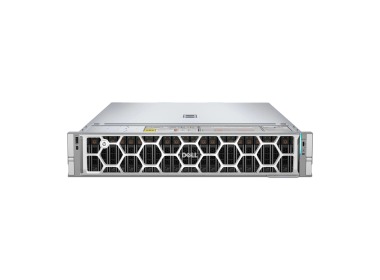
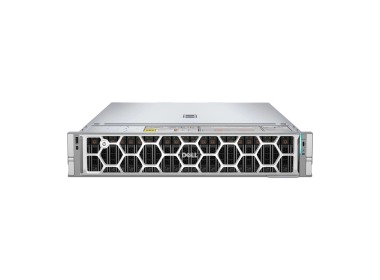
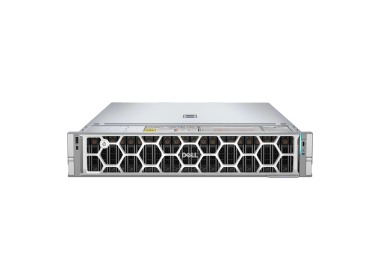
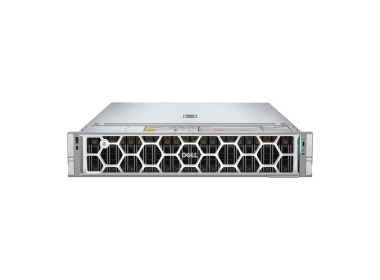
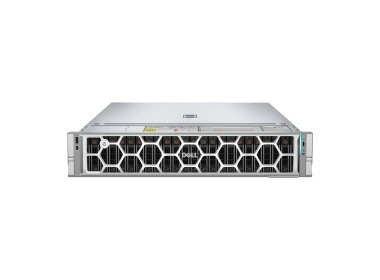
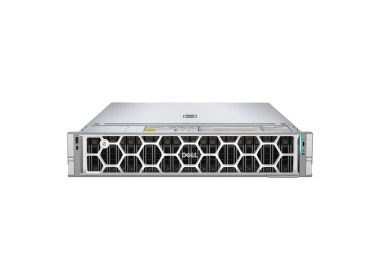
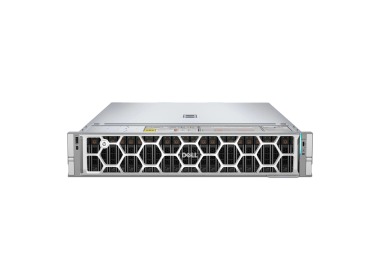
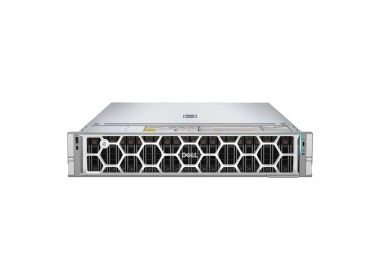
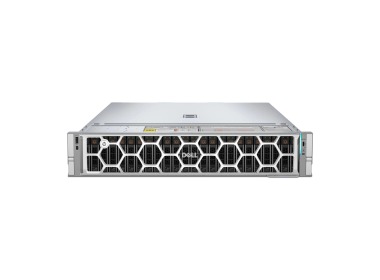
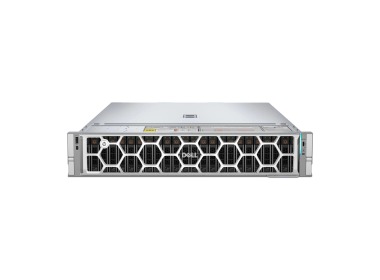
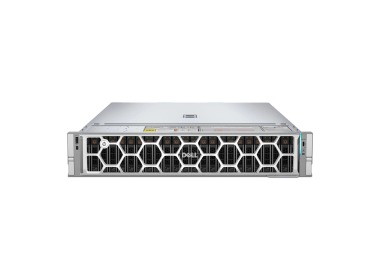
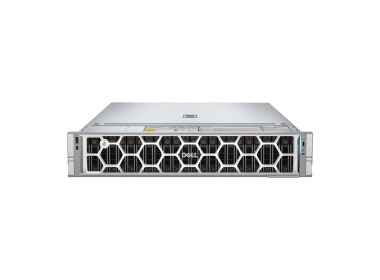
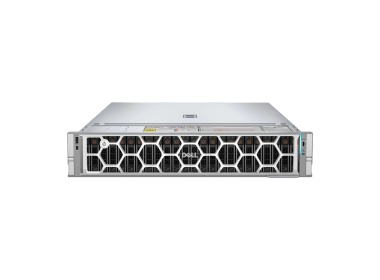
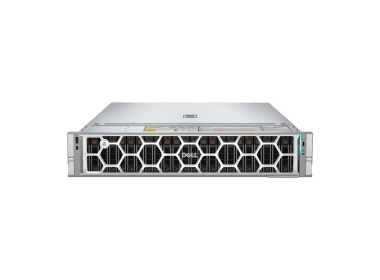
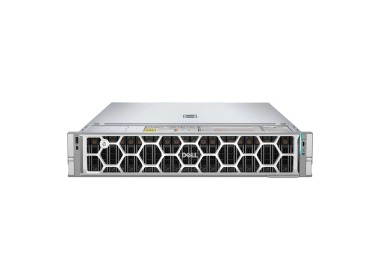
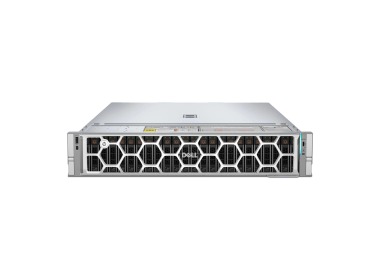
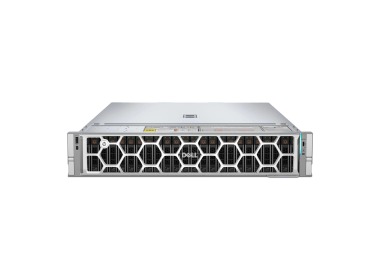
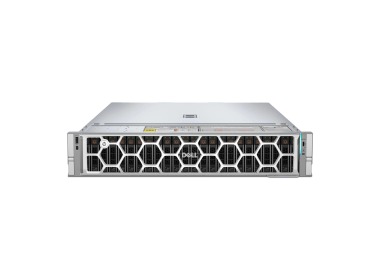
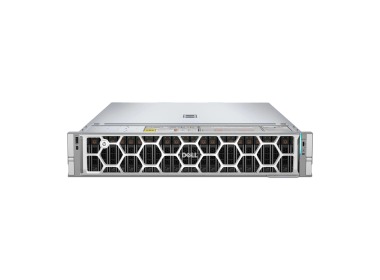
The Dell PowerEdge R7725 is a dual-processor 2U rack server with AMD EPYC 9005, 24 DDR5 slots (up to 6 TB RAM), and up to 8 PCIe Gen5 slots. In our offering, the same chassis is available in versions ranging from 16 to 320 cores, so within a single category you are purchasing three different machines: a server for a licensed database, a general-purpose node, and a dense hypervisor or AI workstation.
Dell PowerEdge R7725 – how does it differ from the single-processor R7715?
The Dell PowerEdge R7725 is a 2U rack server built on the AMD EPYC 9005 platform with two processors. This delivers twice as many cores and twice as many memory channels compared to the single-processor Dell PowerEdge R7715, in the same chassis and with the same number of PCIe slots.
The name reads sequentially: R stands for rack, the first 7 denotes the 2U class, the second 7 indicates the 17th generation, 2 means two sockets, and 5 represents the AMD platform. The entire lineup belongs to the Dell 17th generation rack server family. According to Dell and the StorageReview review, it is a platform for AI, HPC, and large-scale data workloads.
Worth noting: the 24 DIMM slots in the R7725 are 12 slots per processor, meaning one module per channel. The 6 TB limit is therefore the same as in the R7715. You choose the R7725 for cores and memory throughput, not for a higher maximum RAM capacity.
Three configurations in one chassis – which option to choose?
Under the R7725 name, there are three configuration families. They differ so significantly that the processor choice determines the entire project.
|
Parameter |
2x EPYC 9015 |
2x EPYC 9135 |
2x EPYC 9845 |
|
Total cores |
16 (2x8) |
32 (2x16) |
320 (2x160) |
|
Clock speed |
3.6 GHz |
3.65 GHz |
2.1 GHz |
|
Bays and controller |
8x 2.5 inch, H365i |
8x 2.5 inch, H365i |
24x 2.5 inch (8x NVMe), 2x H965i |
|
Networking |
4x 10GbE SFP+ |
4x 10GbE SFP+ |
2x 25GbE SFP28 |
|
Power supplies |
2x 2400 W (one version 2x 800 W) |
2x 2400 W |
2x 3200 W |
|
Choose when |
per-core licensing is the main cost, and the database benefits from high MHz |
you need a general-purpose node: mid-scale virtualization, ERP |
dense virtualization, CI/CD, AI, and HPC, multi-server consolidation |
|
Risk |
too few cores for virtual machines |
not enough cores for consolidation |
licensing and power costs |
Two processors with 8 cores each may seem insufficient, but it is a deliberate choice for licensing: a database paying for every core prefers 16 fast cores over 160 slow ones. The 320-core version, on the other hand, is the answer for teams that want to consolidate several older servers into one, for example for CI/CD servers.
None of the 25 listed options match your requirements? Build your own in the server configurator, and our engineers will verify it before providing a quote.
Decision test: two sockets or one?
Before adding the R7725 to your quote, answer three questions.
Do you need more than 160 cores in a single machine? That is what a single processor in the R7715 supports. If so, two sockets are the only option in this chassis.
Does your workload consume memory throughput? Large in-memory databases, simulations, and HPC benefit from 24 channels instead of 12. For typical file and application services, the difference is negligible.
Do you pay for per-core licensing? Then start from the core count, not the number of sockets. Two processors with 8 cores each can cost less than a single 32-core processor.
If you answered „no” to all three, stay with the R7715. You will pay less for hardware and power, and the performance will be sufficient.
Per-core licensing in a dual-processor server – how many cores do you actually need?
Windows Server, SQL Server, and some hypervisors are licensed per core. From our experience, it is the licenses, not the server itself, that can determine the budget of an entire deployment. That is why the core count in the server is the first decision, not the last.
|
Configuration |
Cores to license |
What it means |
|
2x EPYC 9015 |
16 |
lowest licensing cost, high clock speed of 3.6 GHz |
|
2x EPYC 9135 |
32 |
16 more cores than the 9015, headroom for a dozen or so virtual machines |
|
2x EPYC 9845 |
320 |
288 more cores than the 9135, justified only at full utilization |
There is also NUMA to consider. Two sockets mean two memory nodes: a virtual machine that fits within a single node has fast access to RAM, while one spread across both incurs latency penalties. For many small machines, this is irrelevant. For a single large database on servers for Microsoft SQL Server, it matters significantly, so it is best to keep it within a single node.
If you are building a virtualization environment, check VMware servers or plan a cluster on Proxmox. For ERP systems, see servers for SAP, and Windows Server licenses are available in the Microsoft software category. A broader overview of processors for this platform is available in AMD EPYC Turin processors.
Memory in the R7725 – 24 channels and the 32 GB configuration pitfall
The server has 24 DDR5 RDIMM slots, 12 per processor, and supports up to 6 TB RAM. According to Dell specifications, the memory operates at speeds of up to 6400 MT/s. Capacity is only half the story; the other half is the number of channels you actually populate.
|
RAM in configuration |
Channels occupied out of 24 |
What it means |
|
32 GB |
at most 2 |
starting point; the throughput of most channels goes unused |
|
64 GB |
at most 4 |
entry level for small environments |
|
128 GB and 256 GB |
depends on modules |
the number of modules is determined in the configurator |
|
Full throughput |
24 out of 24 |
24 modules, one per channel |
The smallest modules in our configurations are 16 GB, so 32 GB of RAM occupies at most 2 out of 24 channels. For databases and virtualization, this wastes the second processor, because every missing module is an unused channel. Details on selecting the right capacity are described in the guide how much RAM for a business server, and modules are available in the RDIMM RAM category.
Want to populate all 24 channels? Describe your project in the hardware configurator, and we will select modules so you do not overpay at current DDR5 prices.
Drives, NVMe, and controllers – H365i or two H965i?
In the 8-bay versions, the controller is the H365i. The operating system goes on 2 SATA SSD drives, and data on 4 NVMe U.2 drives at 3.84 TB each or 6 SAS SSD drives at 1.6 TB each. The version with 24 bays (8 of which are NVMe) receives two H965i controllers and leaves plenty of empty bays for future expansion.
Dell also offers variants of this chassis with 12 x 3.5-inch bays and EDSFF E3.S drives, but these are different configurations than those on our list. If write performance is a priority, check the NVMe drives category. For databases and virtual machines, we typically select RAID 10; for archival, RAID 6; and available controllers can be found in Dell RAID controllers.
3200 W power supplies, DLC cooling, and the rack – what to consider before ordering?
The variant with two EPYC 9845 processors draws 2 x 390 W for the processors alone, totaling 780 W before accounting for memory, NVMe drives, and the network adapter. That is why 320-core configurations come with 2x 3200 W. This is not excess capacity, but headroom that protects against dips under full load.
|
Power supplies |
Configuration from the list |
What to keep in mind |
|
2x 800 W |
2x EPYC 9015, smallest RAM |
no headroom for additional cards and NVMe drives |
|
2x 2400 W |
2x EPYC 9015 and 9135 |
headroom for drives and a network adapter |
|
2x 3200 W |
2x EPYC 9845 |
verify the circuit and PDU strips with an electrician before delivery |
|
A depth of 802.4 mm is not just a label, it is a real constraint The R7725 chassis measures 86.8 mm in height, 482 mm in width, and 802.4 mm in depth. In a shallow rack cabinet, there will not be enough room for cables and power connections, so measure it before ordering. Dell also offers direct liquid cooling (DLC). Availability of this variant in our offering is confirmed upon request. |
Plan circuits, failover, and power protection with UPS backup power, and if needed, select spare server power supplies and an appropriate rack cabinet. For larger budgets, also consider server leasing, which spreads hardware costs over time.
GPU in the R7725 – two 450 W cards or six 75 W cards?
The chassis accepts up to 2 dual-width cards at 450 W or up to 6 single-width cards at 75 W, and offers a total of up to 8 PCIe Gen5 slots and up to 2 OCP 3.0 sockets. The first layout is the choice for training smaller models and large-scale inference; the second is for multiple lightweight accelerators. Broader context is available in the AI servers category and the graphics cards offering.
Match networking to the links in your rack: 4x 10GbE SFP+ in the 9015 and 9135 versions, 2x 25GbE SFP28 in the 9845 version. You will also need rack switches with the appropriate ports and optical modules.
R7725 vs R770 or R7625?
If your company standard is Intel, check the Dell PowerEdge R770. Looking for a lower budget and do not need PCIe Gen5? See the Dell PowerEdge R7625, a dual-processor EPYC from the previous generation. The single-processor version is available as the R7715.
FAQ
How does the Dell PowerEdge R7725 differ from the R7715?
The R7725 has two EPYC 9005 processors, the R7715 has one. Both machines are 2U with 24 DDR5 slots and a 6 TB limit, but in the R7725 the slots are split across two sockets, so you get twice as many memory channels.
How many cores do the R7725 servers in the offering have?
16, 32, or 320 cores in total, depending on the processor: 2x EPYC 9015, 2x EPYC 9135, or 2x EPYC 9845. Dell supports up to 384 cores in this chassis.
How much RAM should I choose for the R7725 to avoid wasting the second processor?
Populate all memory channels, not just the capacity. A 32 GB configuration occupies at most 2 out of 24 channels, so for databases and virtualization it is advisable to select more modules.
What power supply for the Dell R7725?
For the 2x EPYC 9015 and 9135, 2x 2400 W is sufficient; for the 2x EPYC 9845, we use 2x 3200 W. The 800 W variants are for the lightest configurations without additional cards.
Does the R7725 support GPU cards?
Yes: up to 2 dual-width 450 W cards or up to 6 single-width 75 W cards. The number of cards depends on the riser and power supply configuration.
Can the R7725 be liquid-cooled?
Dell offers both air cooling and direct liquid cooling (DLC). Availability of the DLC version in our offering is confirmed upon request.
Does a dual-processor server mean higher licensing costs?
Per-core licensing costs depend on the number of cores, not sockets. 2x EPYC 9015 totals 16 cores, while a single EPYC 9845 processor in the R7715 has 160.
What does the name R7725 mean?
R stands for rack, 7 denotes the 2U class, the second 7 indicates the 17th generation, 2 means two processor sockets, and 5 represents the AMD platform.